Sample Development
admin2026-09-09T11:31:52+00:00Sample Development
Kilt Line was established in 2019, and since then we have been working with various designers and fashion brands to help create new collections every quarter.
Our clothing pattern maker can make products for you based on your design draft, completed technical package or any reference clothing you provide to make samples for you.
Timetable for Your Sample Development
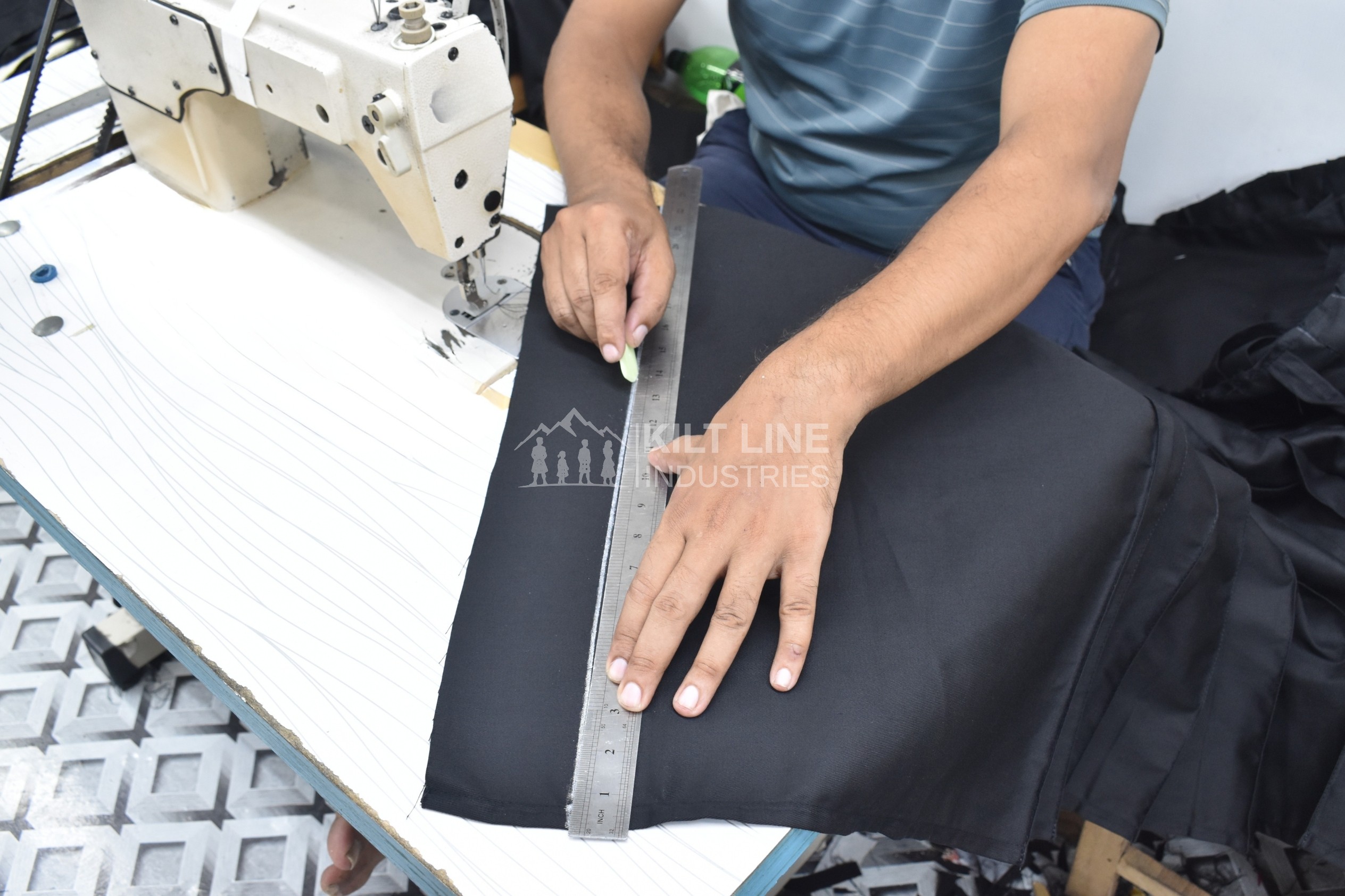
Make pattern
1 working days. Drafted to your measurements or size chart.
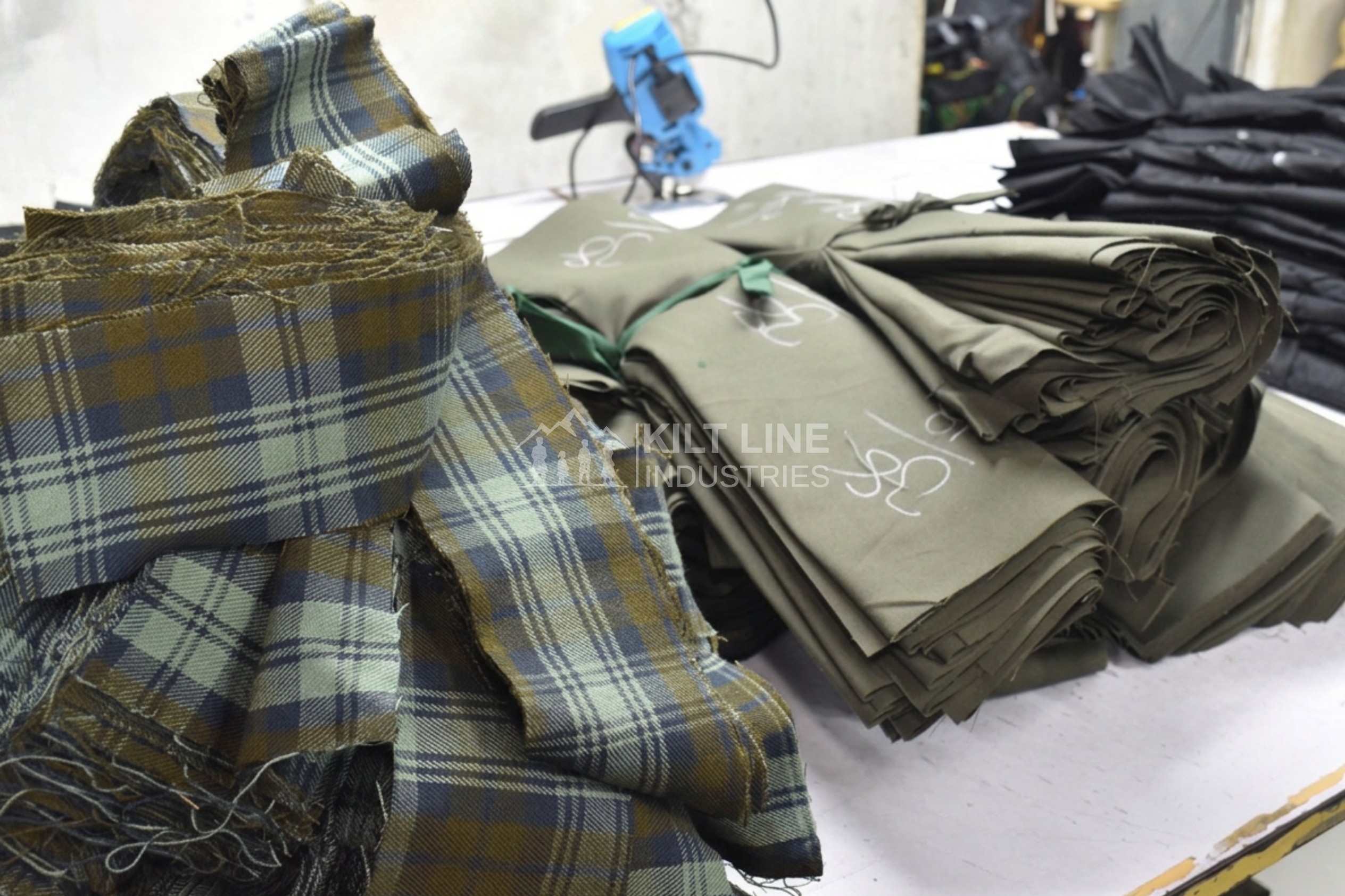
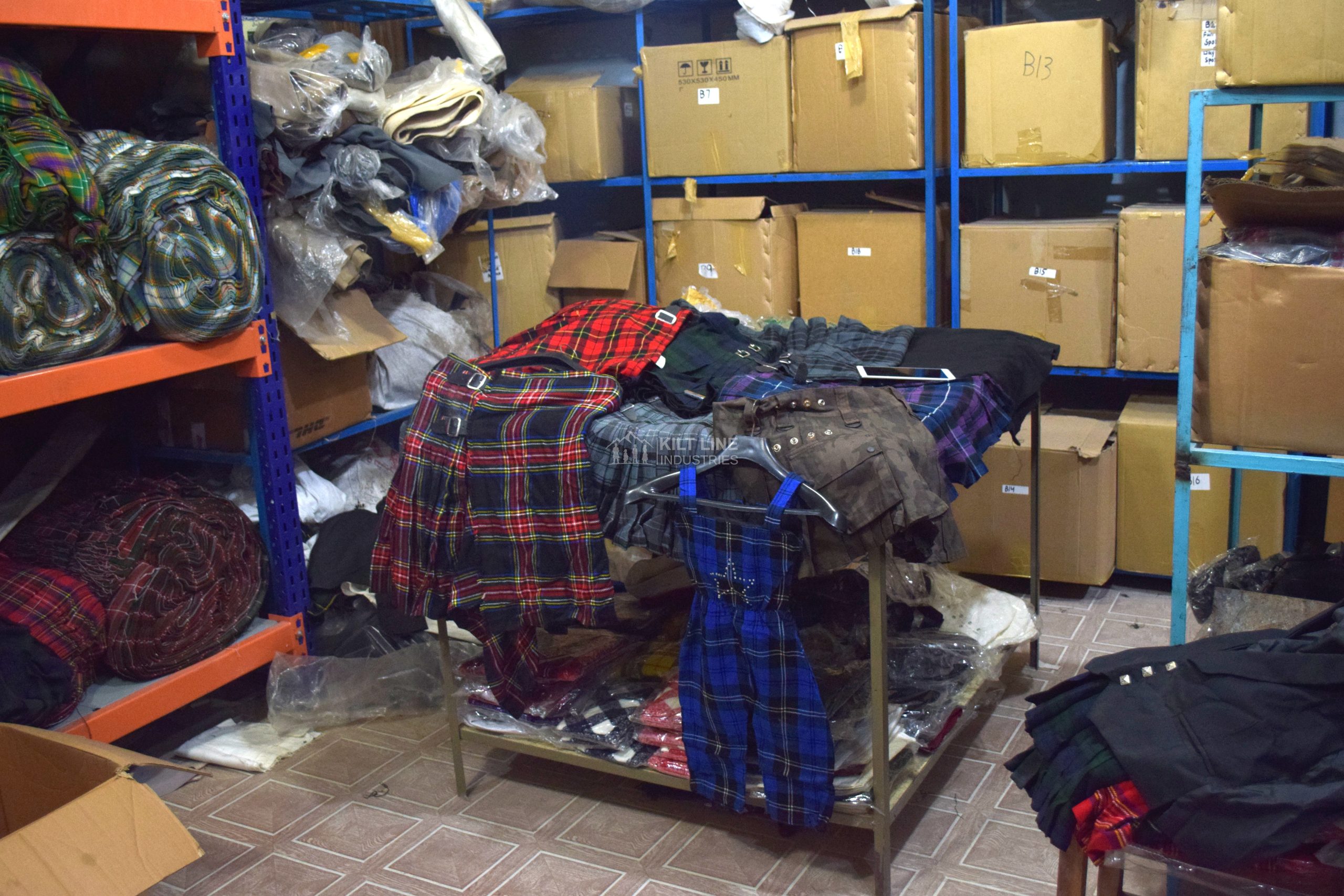
Prepare Fabric
3 working days. Cotton held in stock, Tartan depends on stock availability.
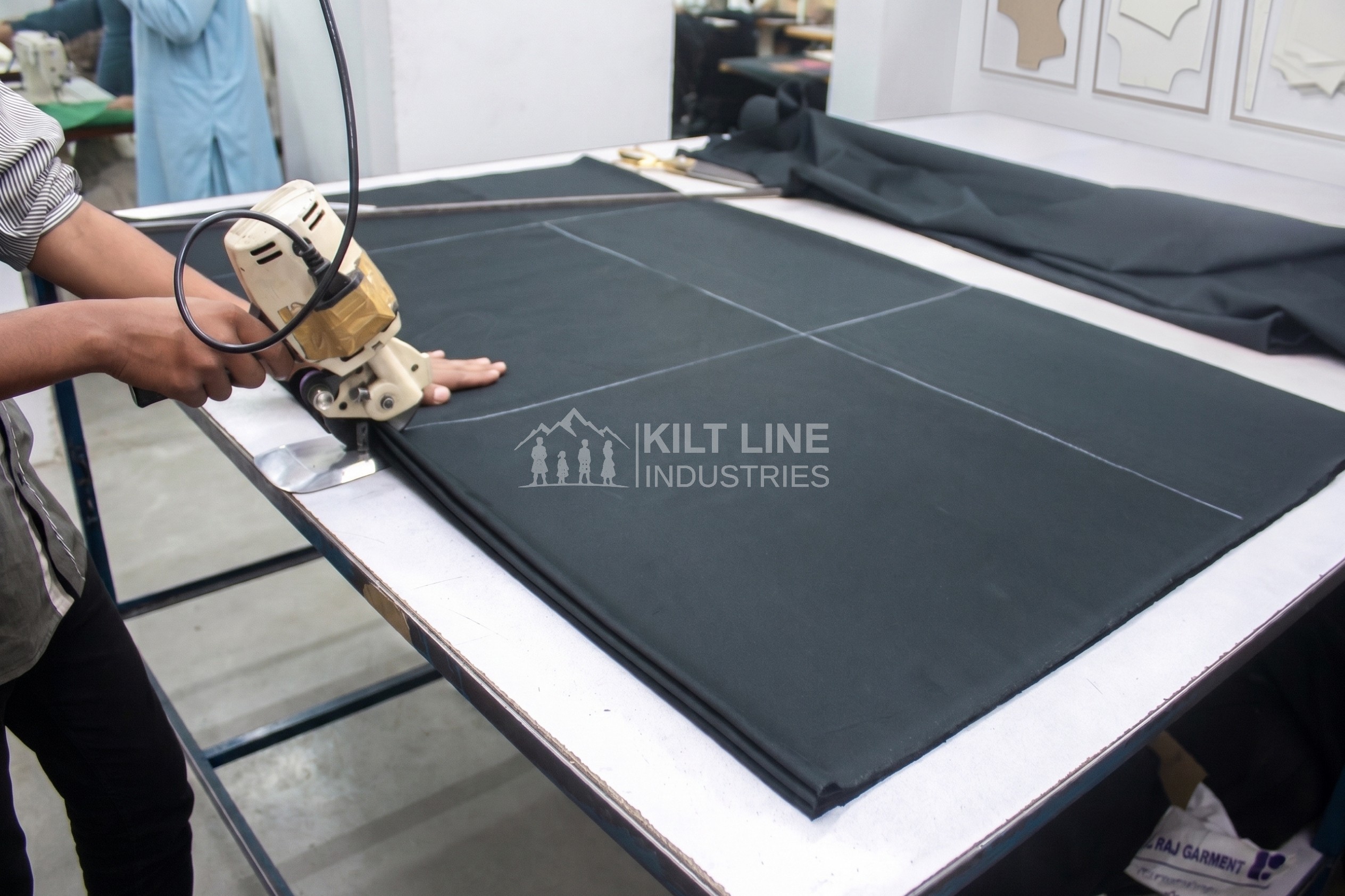
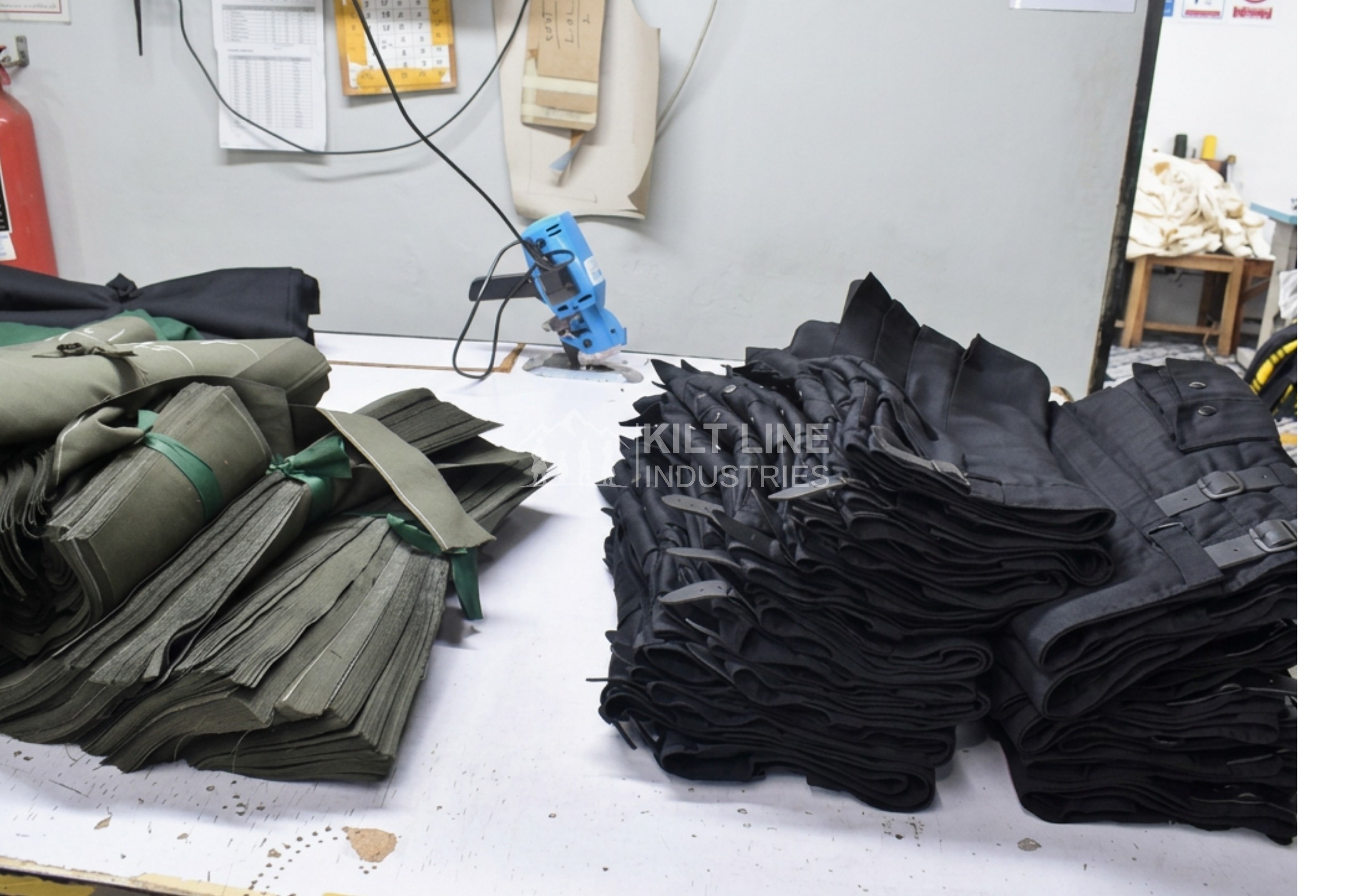
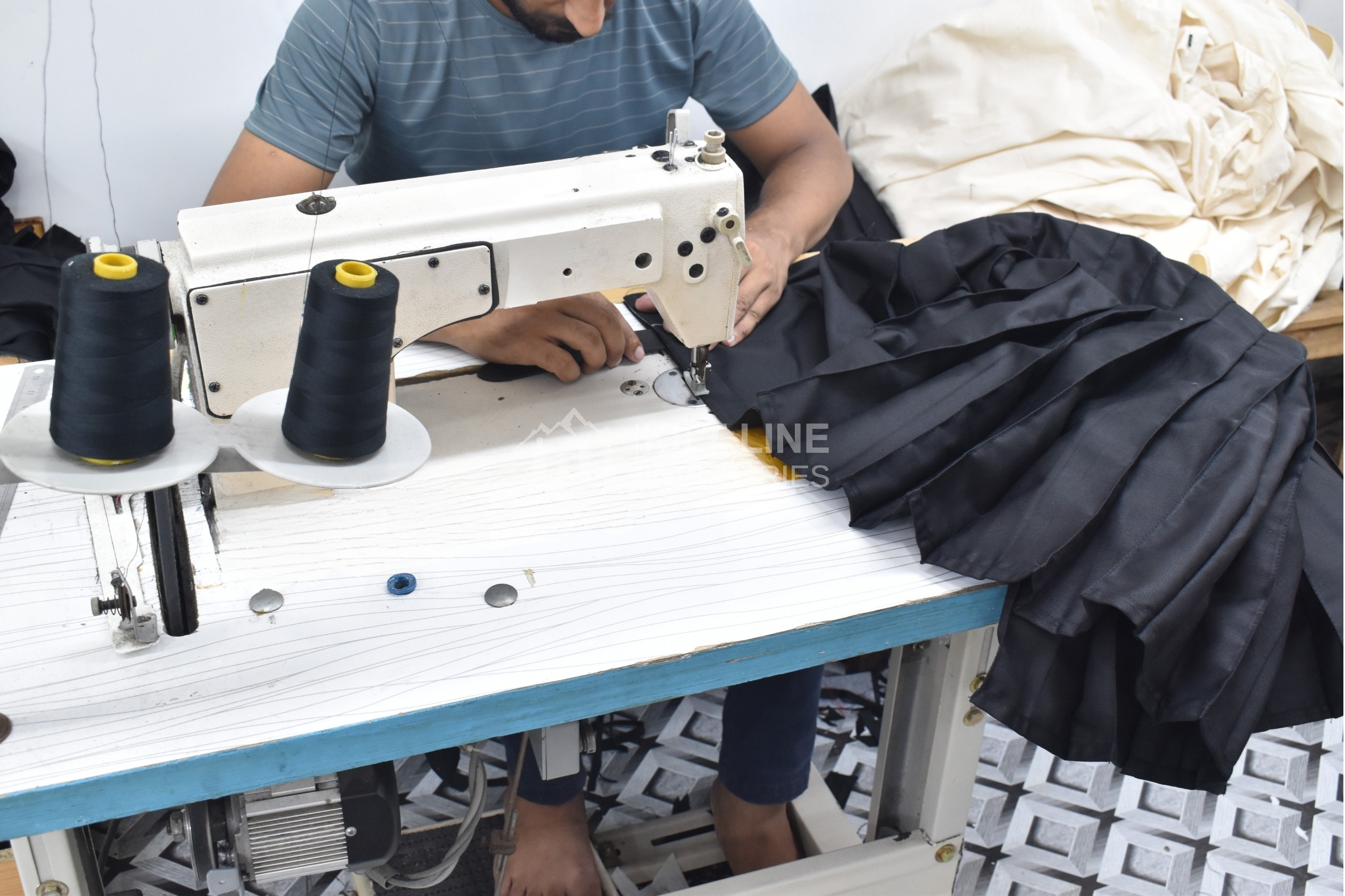
Cutting and pleating
2 working days. Cloth cut and pleated to the sett or stripe.
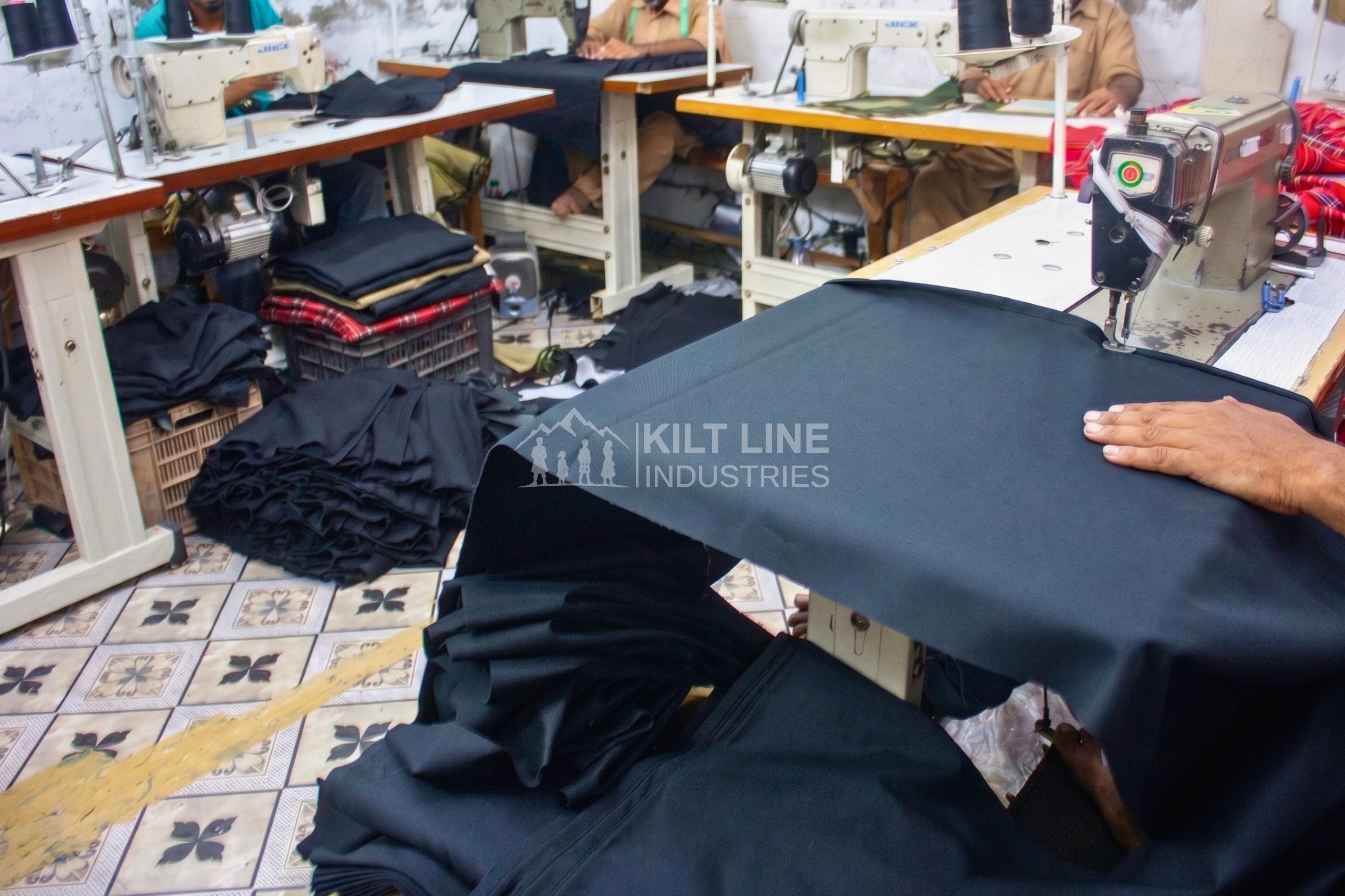
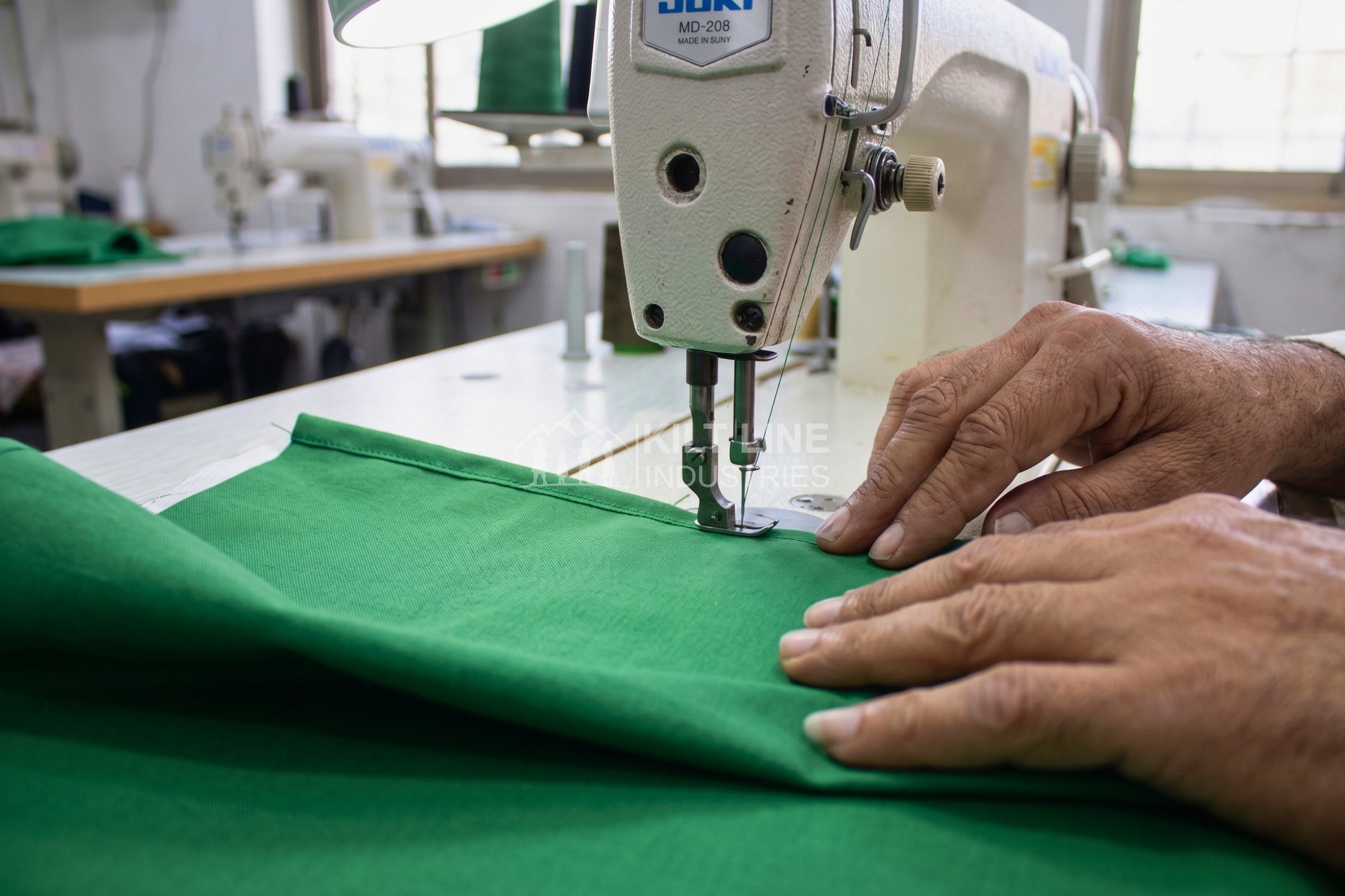
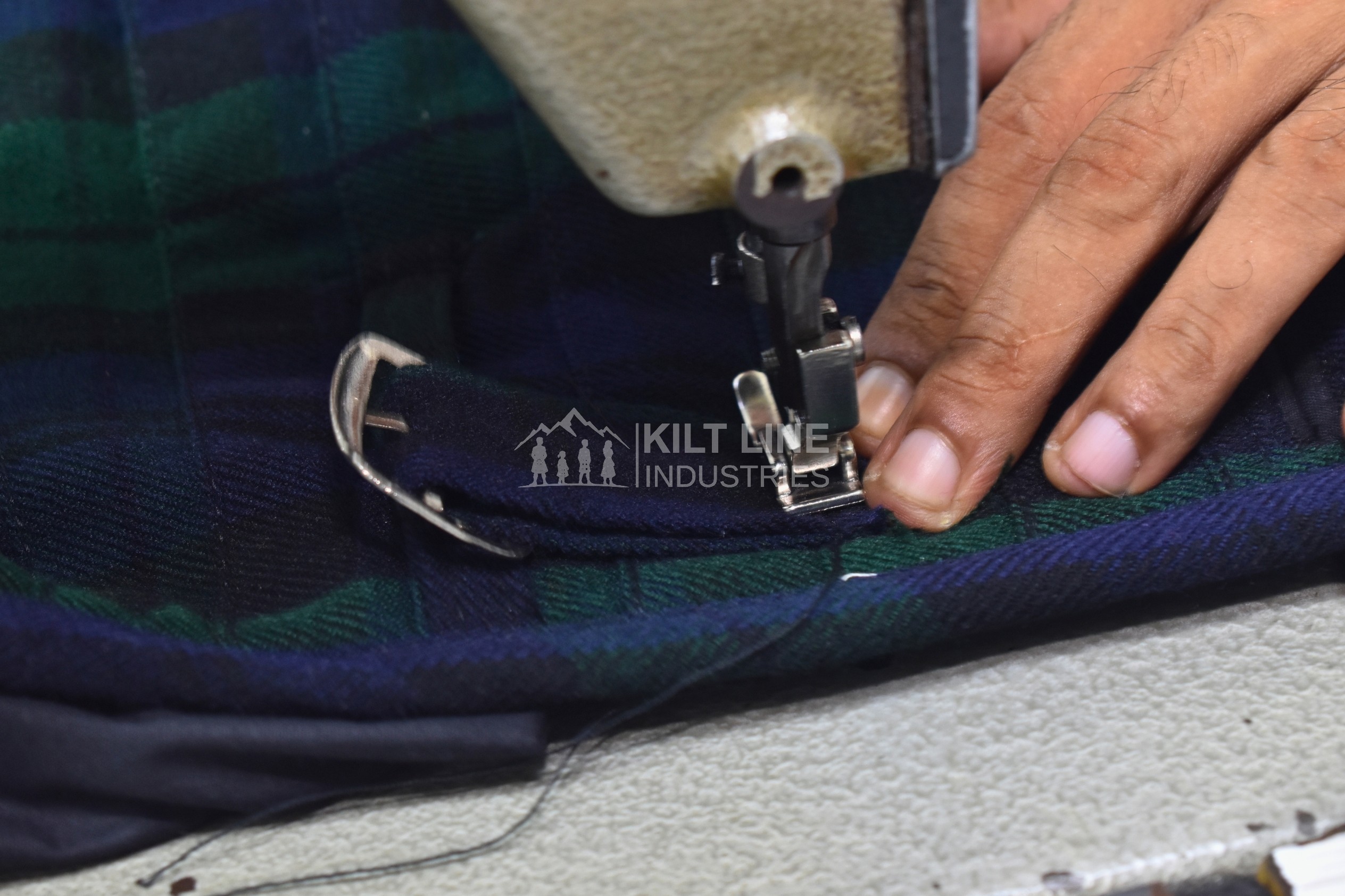
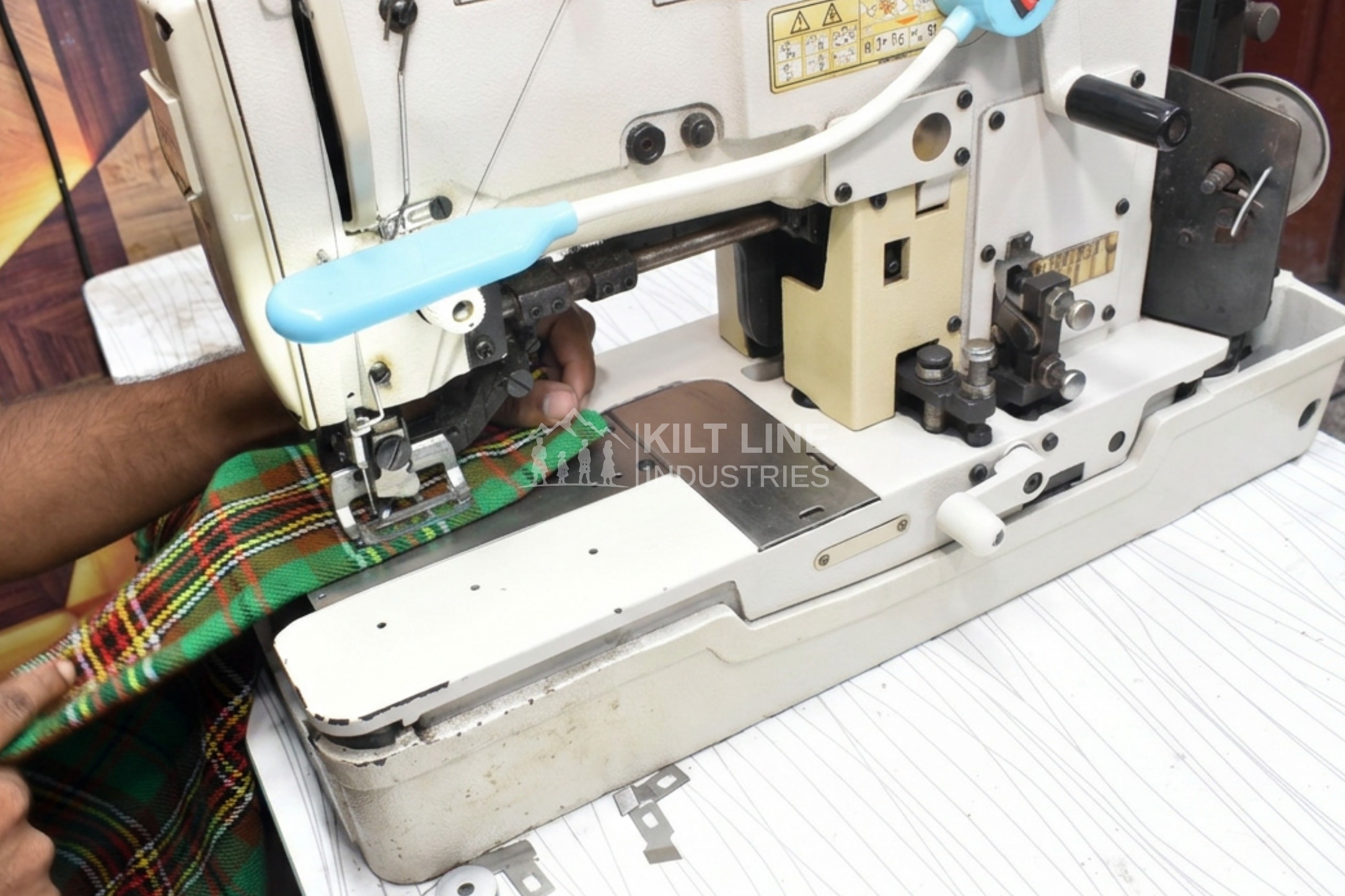
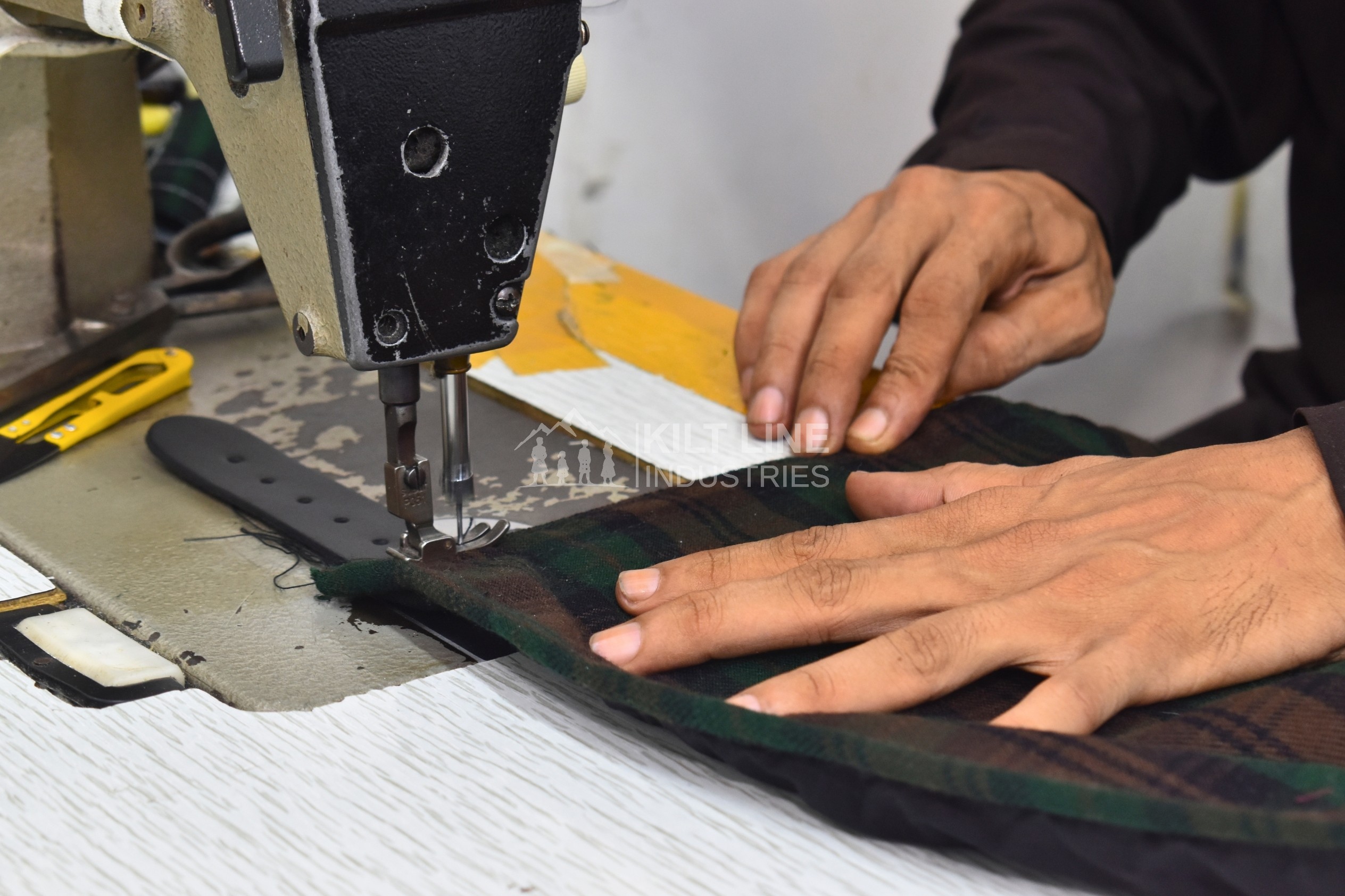
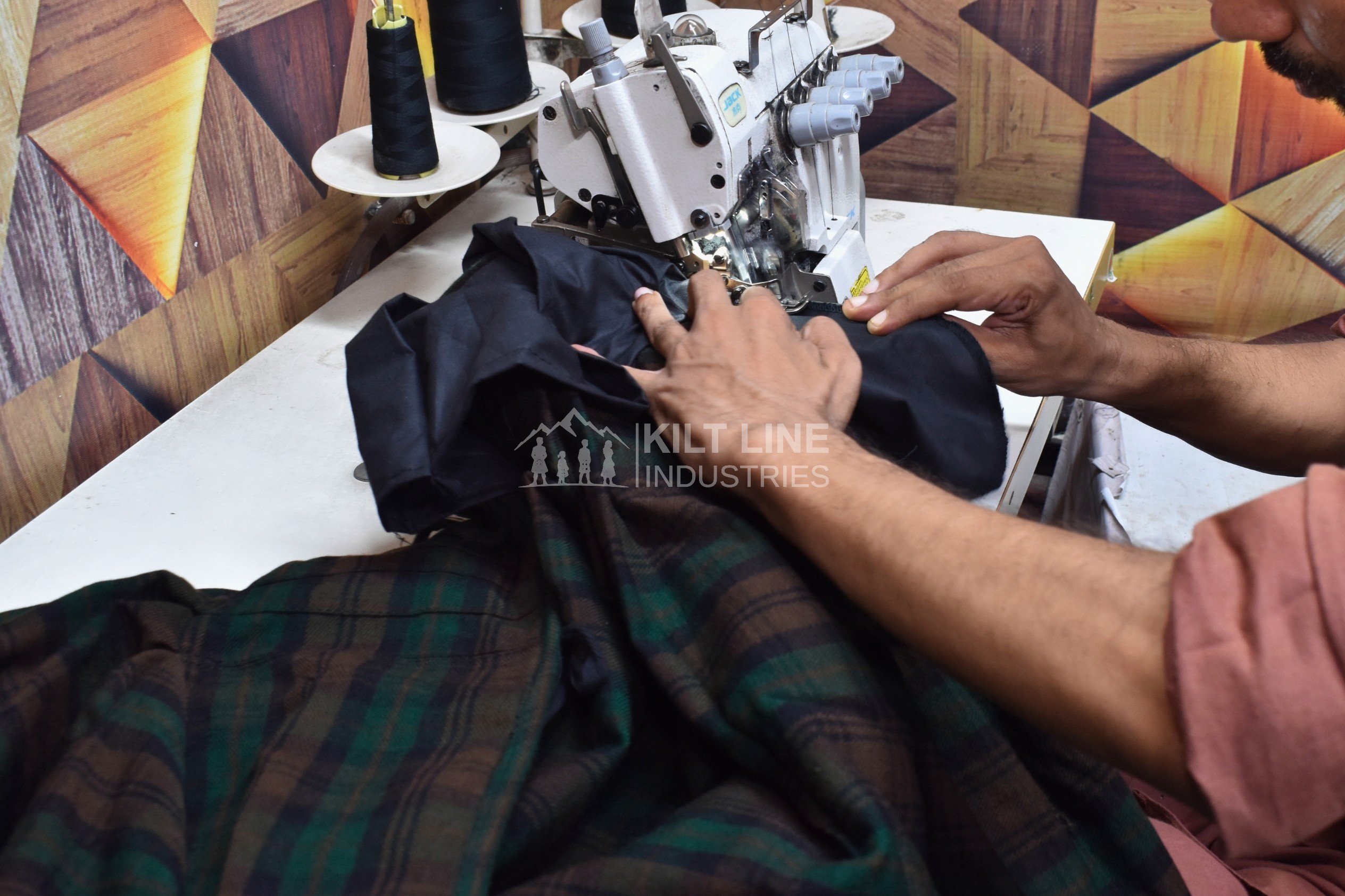
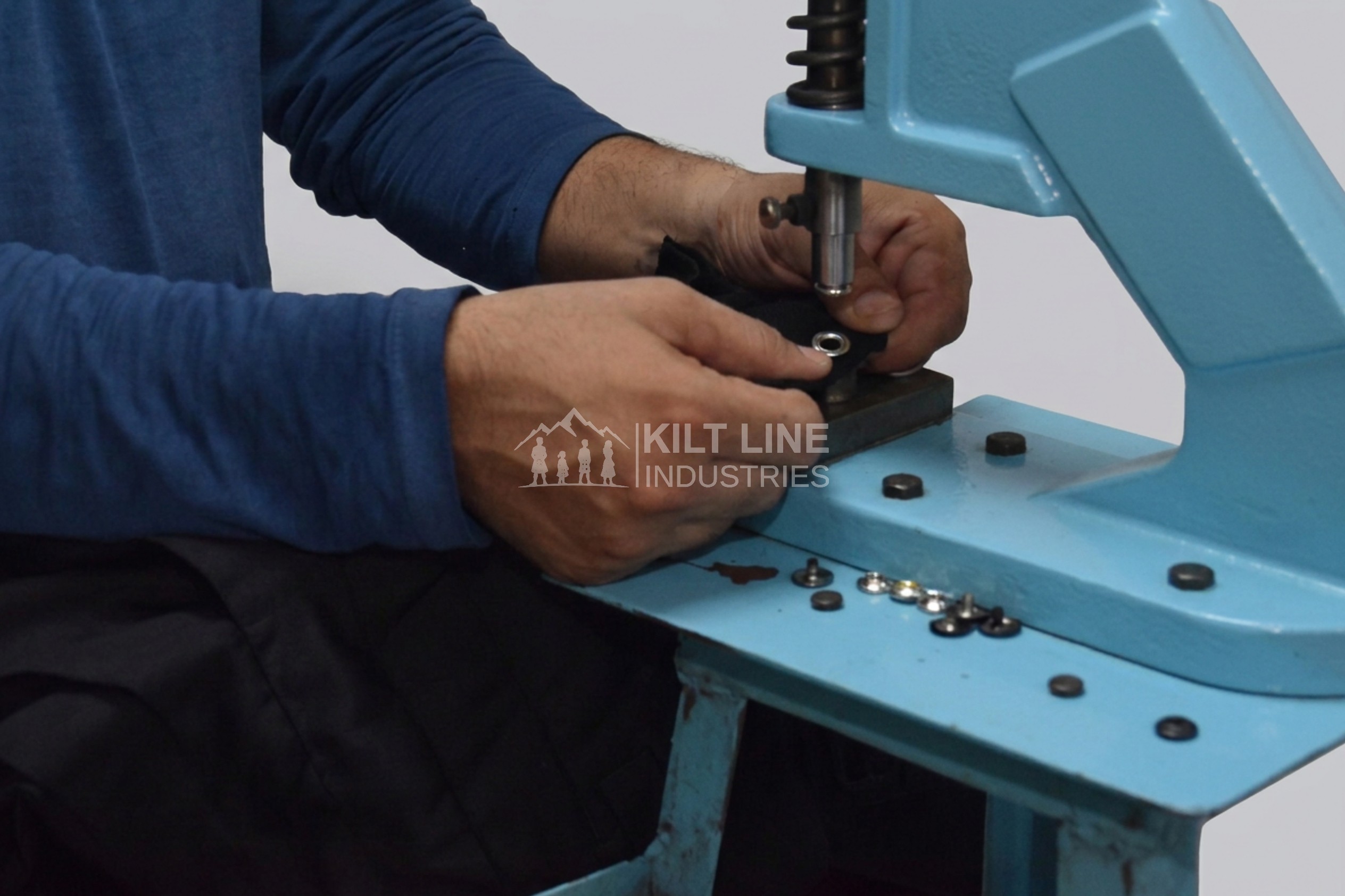
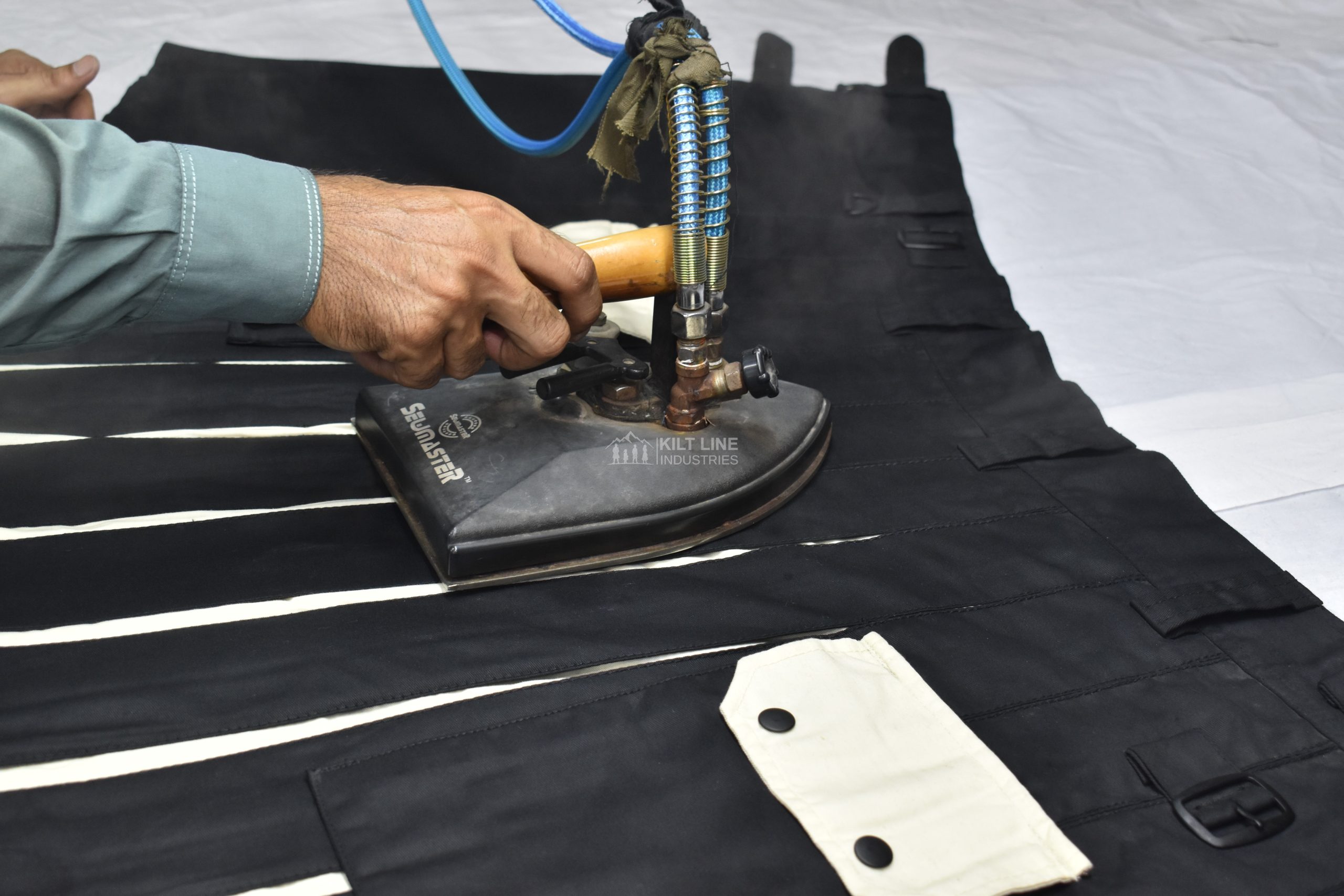
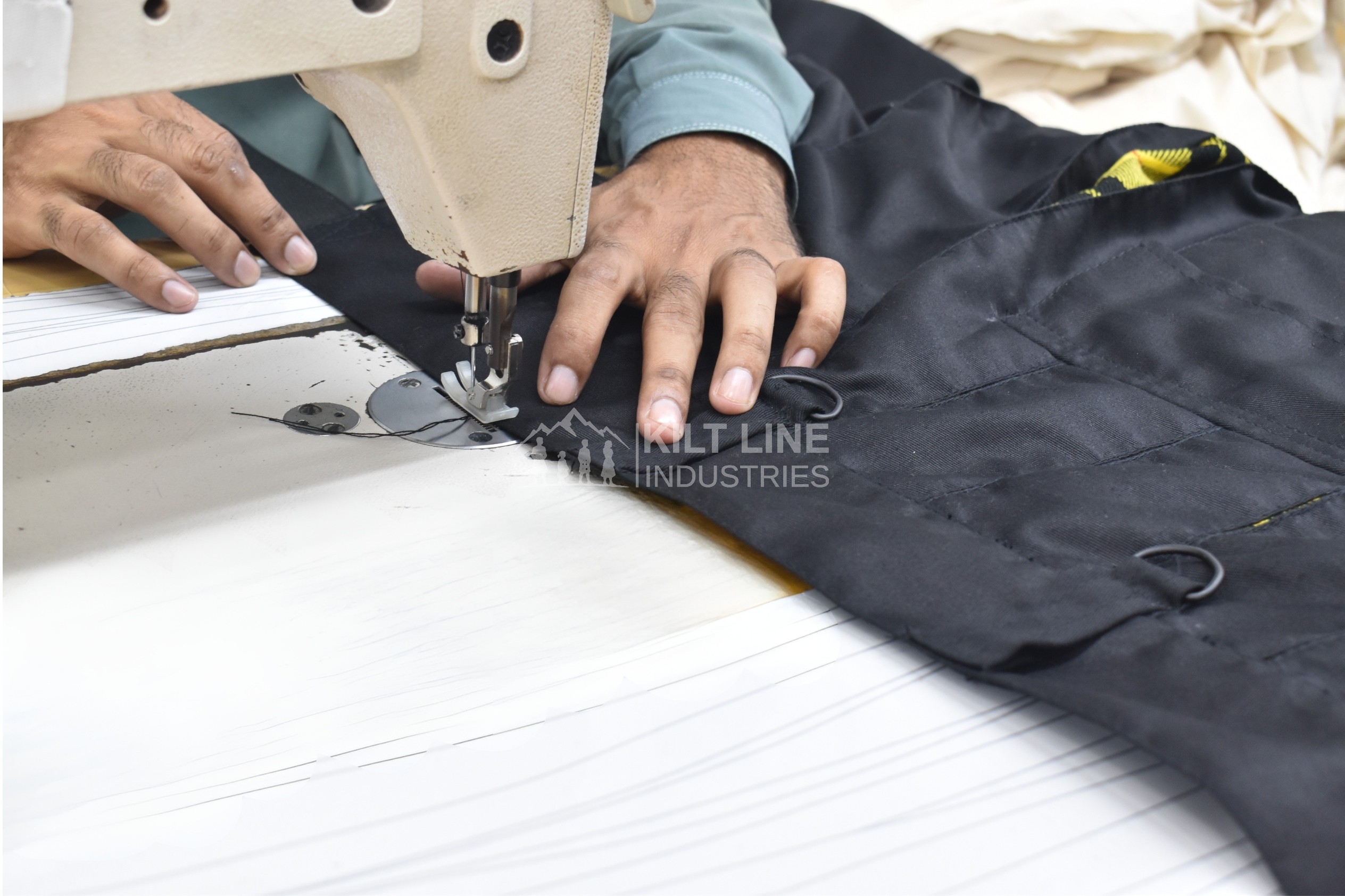
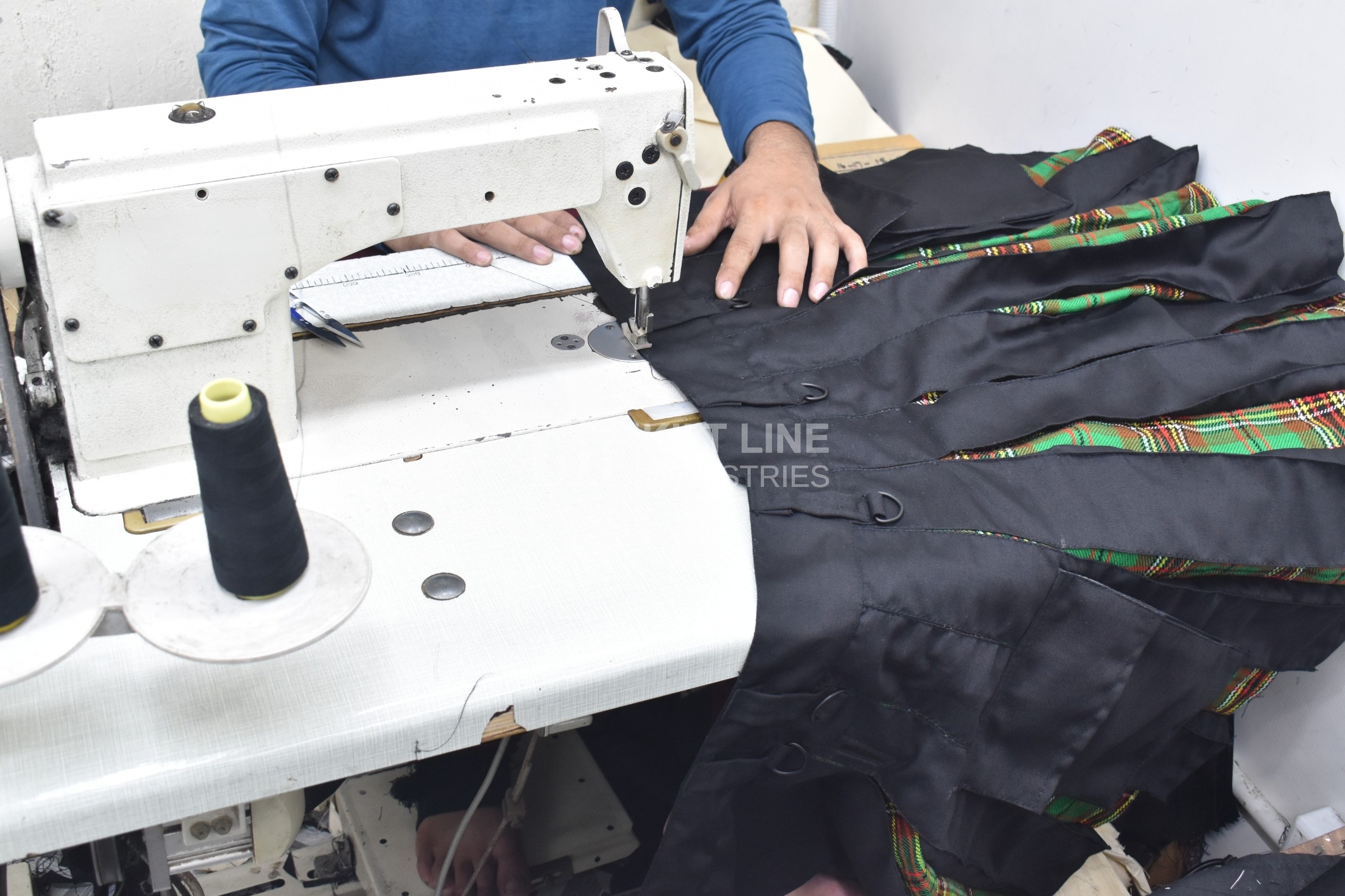
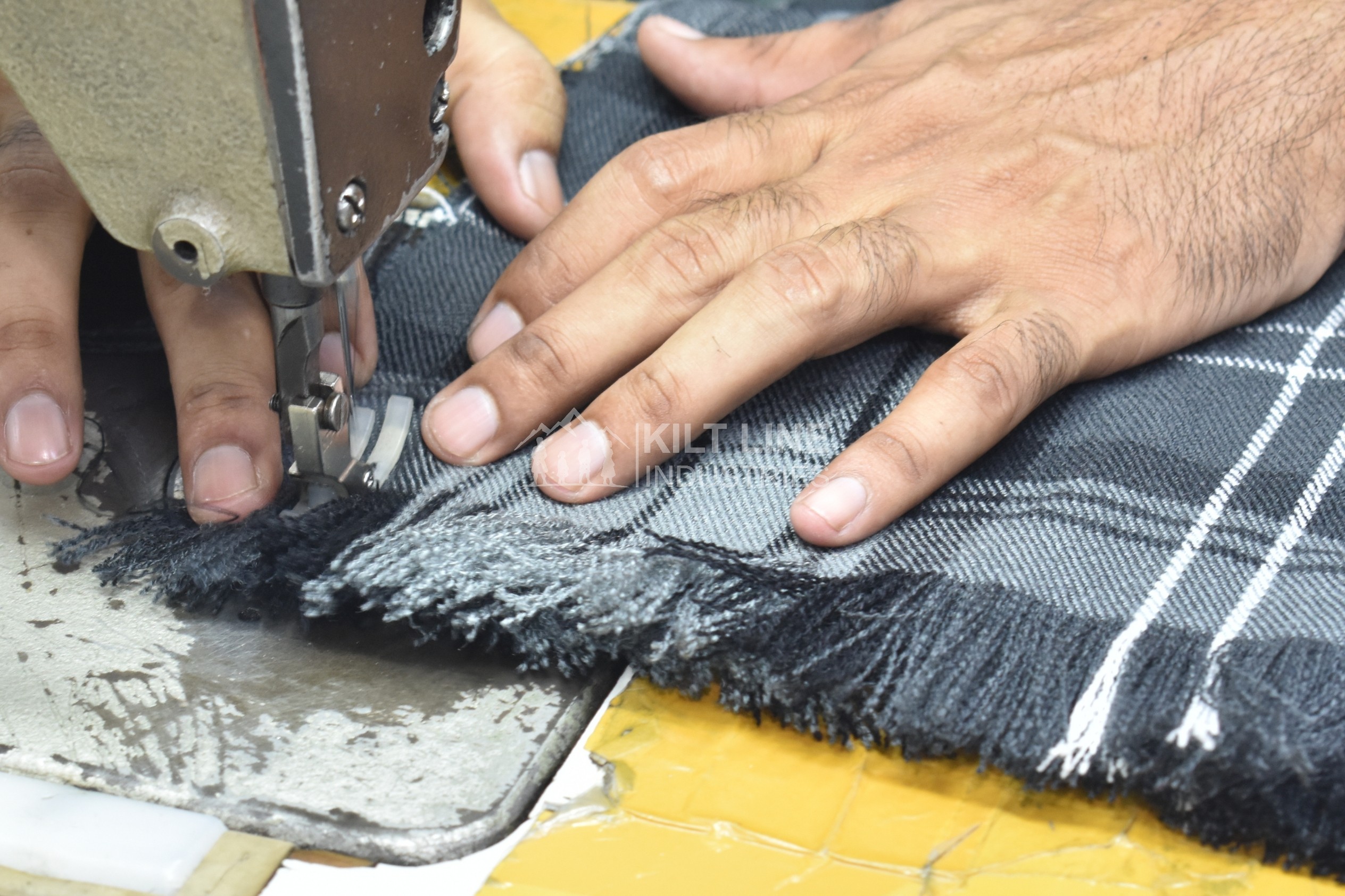
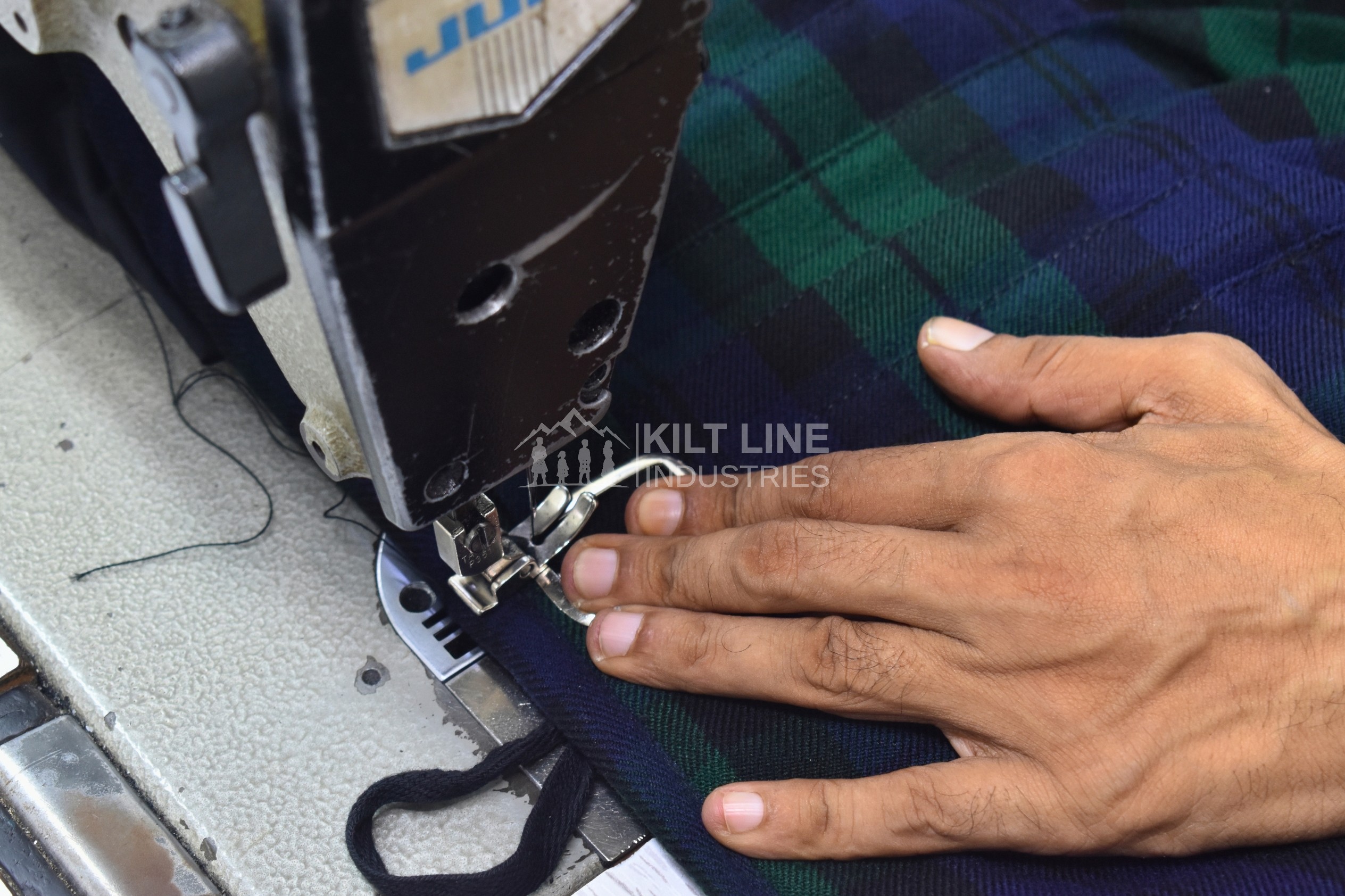
Stitching & Finishing
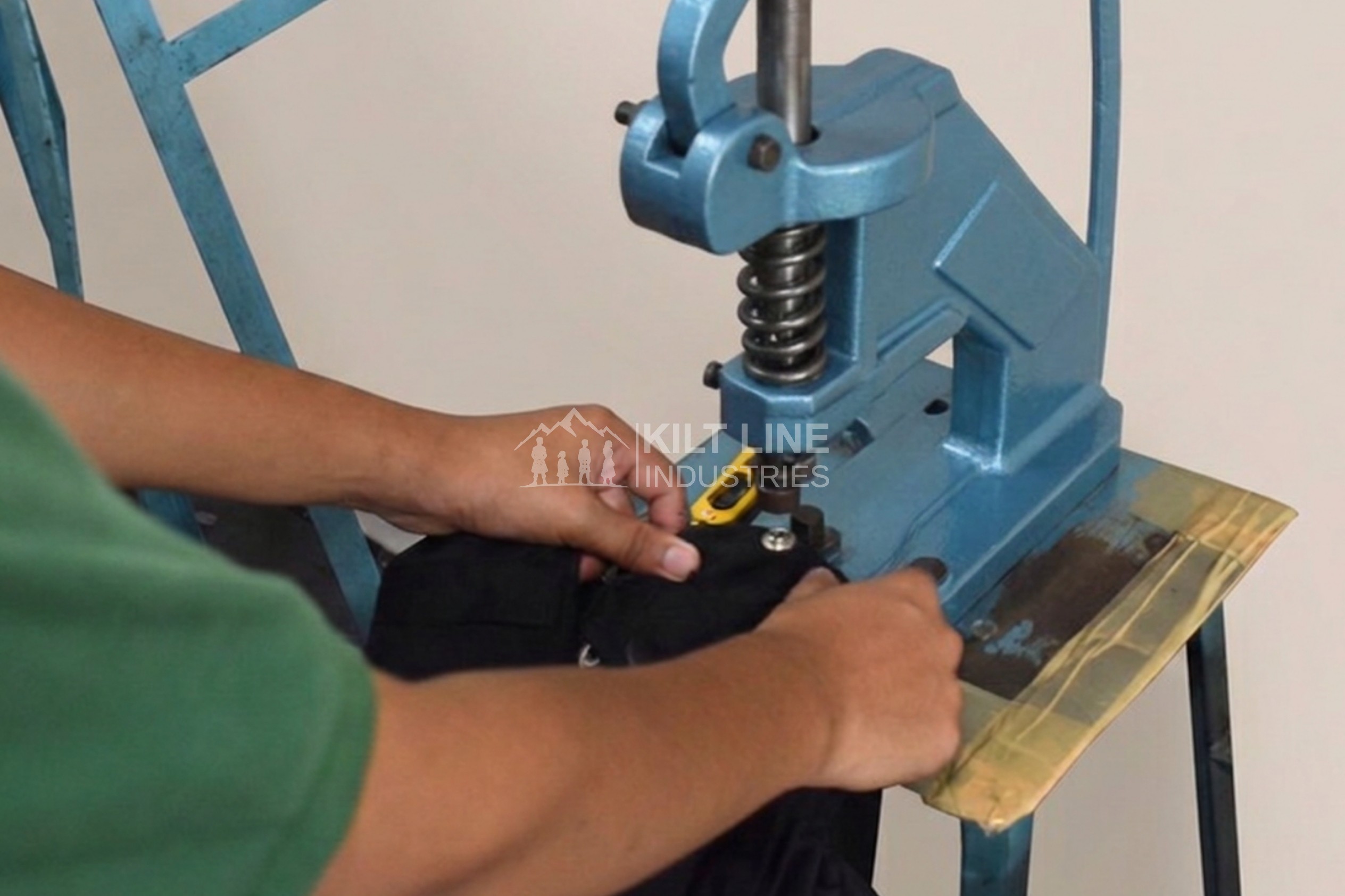
2 working days. buckles and Straps.
01
Project Discussion
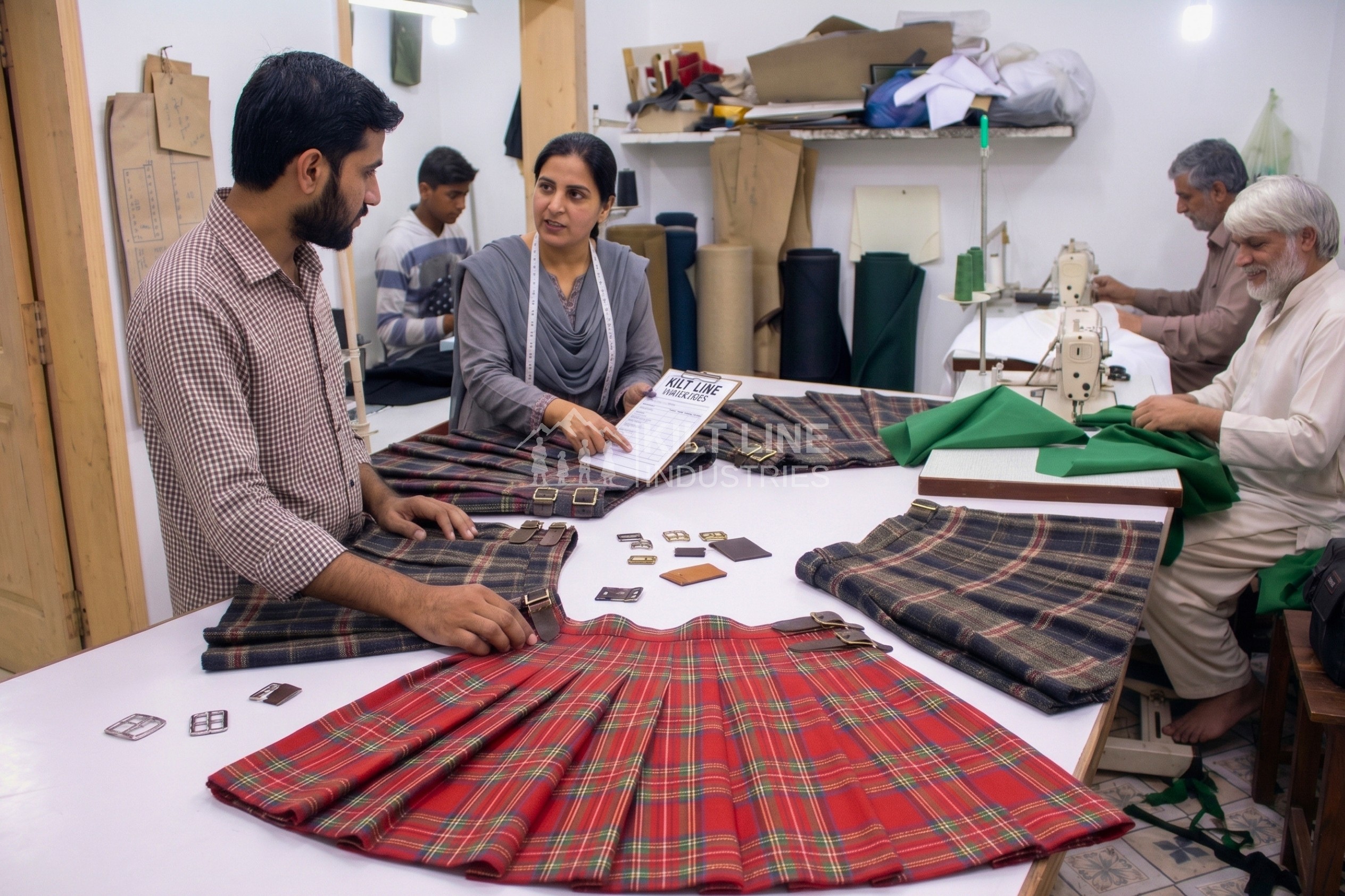
We talk through your design before anything is cut: tartan or cotton, pleating style, pocket and strap layout, and the size range you plan to sell. From that conversation we build your technical drawings and tech pack so the sample is made to a written spec, not a guess.
02
Fabrics & Trims Sourcing
We check our own stock first. If your tartan is already held, work starts straight away. If not, we place the yarn colours with our trusted mill, and weaving begins once the yarn is received. Cotton Fabric for utility kilts is kept in stock year round, along with straps, buckles, D-rings, rivets and zips.
03
Pattern & Sewing
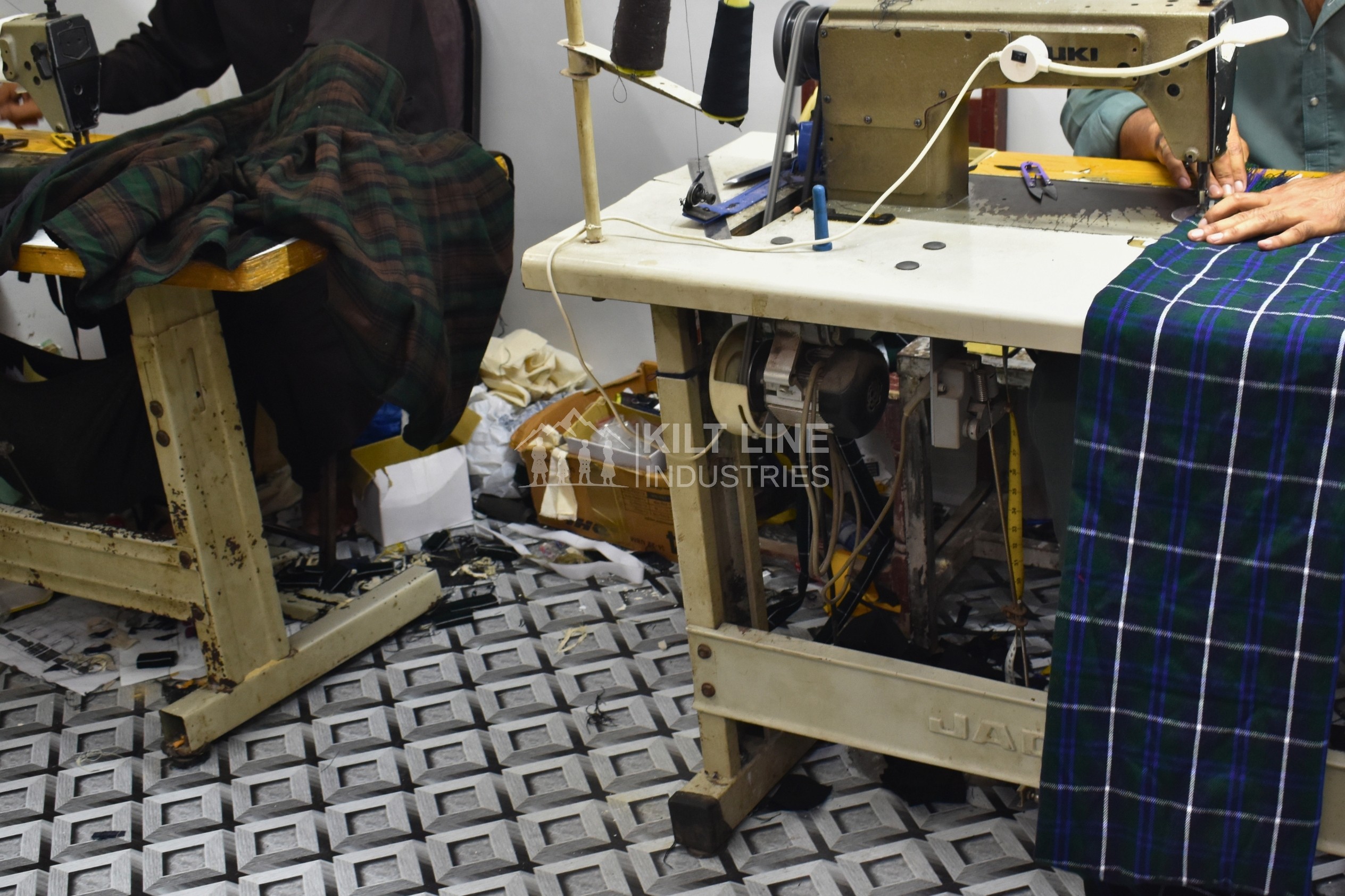
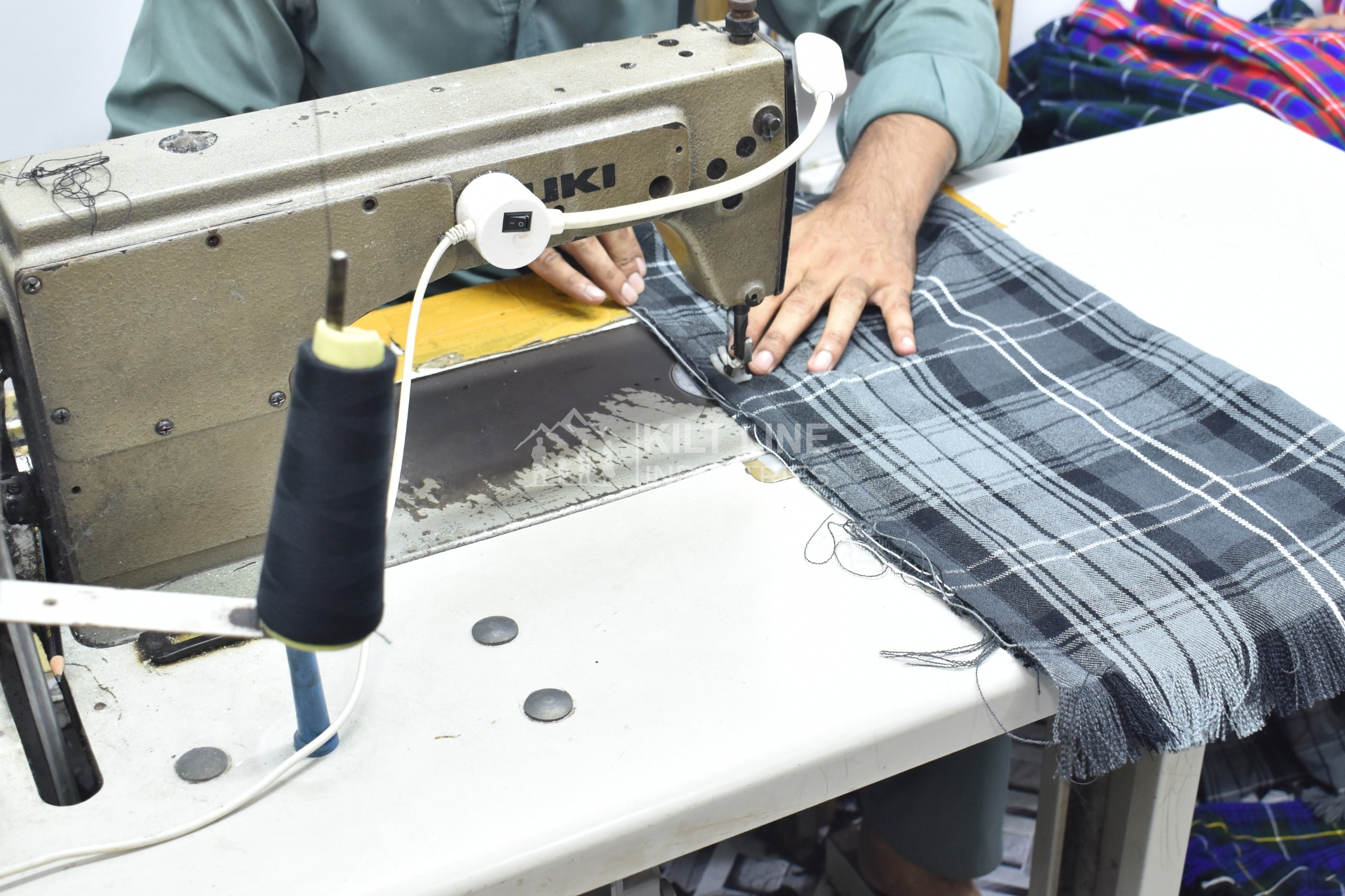
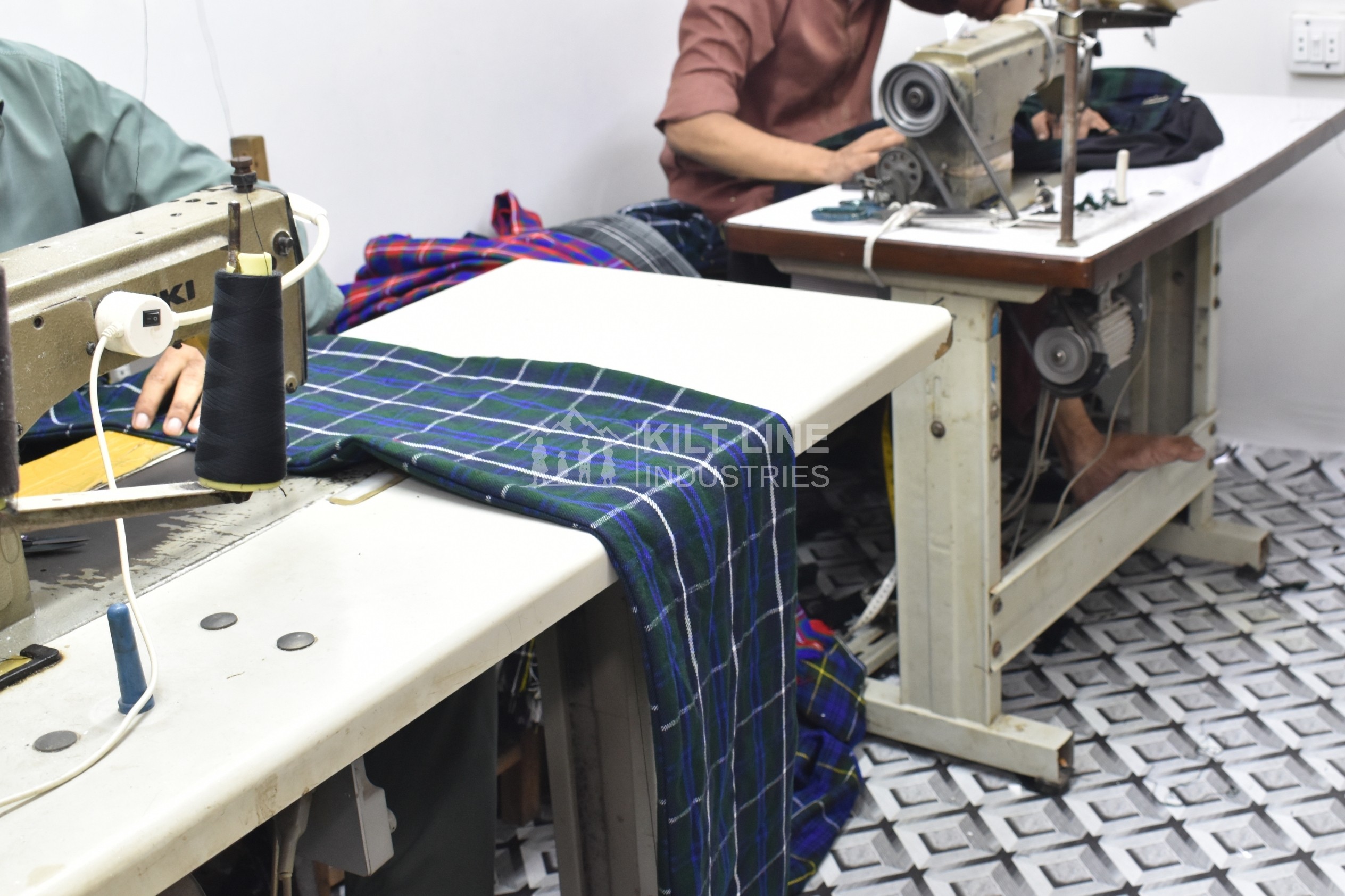
Our pattern master drafts every block in house, for men's and women's tartan clothing cut to your measurements or graded size chart. Kilts are hand pleated to the sett or to the stripe. Jackets, skirts, trousers and waistcoats are cut with the sett matched across seams, and every detail is recorded so the sample can be repeated in production.
04
QC of Samples
Every finished sample is measured against the spec and checked for sett matching across the seams, even pleating, secure stitching and correct hardware. We send photos and video before dispatch so you can approve the work or request changes while it is still with us.
The bulk order price will update after the sample is approved. Here are 4 factors that could lead to a different price:
01 — Order quantity. There is no minimum order with us. Start with a single piece or a full run of a thousand. Larger quantities bring the unit price down, so we will show you where the price breaks fall and let you decide what suits your budget.
02 — Sizes and colorways. Every extra tartan and every extra size means a separate cut and setup, which adds to the cost. Spreading a small order thinly across many options raises the unit price. Concentrating it on fewer sizes and colors brings it down.
03 — Fabric and cloth choice. Cotton drill, poly-viscose tartan and pure wool tartan all sit at different price points, and heavier cloth uses more yardage per garment. A sett we hold in stock costs less than one woven to order.
04 — Construction and finish. Hand-stitched pleating, leather straps, heavy buckles, chains, cargo pockets and embroidery all add labor and material. A plain utility kilt and a fully finished wool kilt are two different builds, and the price reflects that accessories, and buttons.